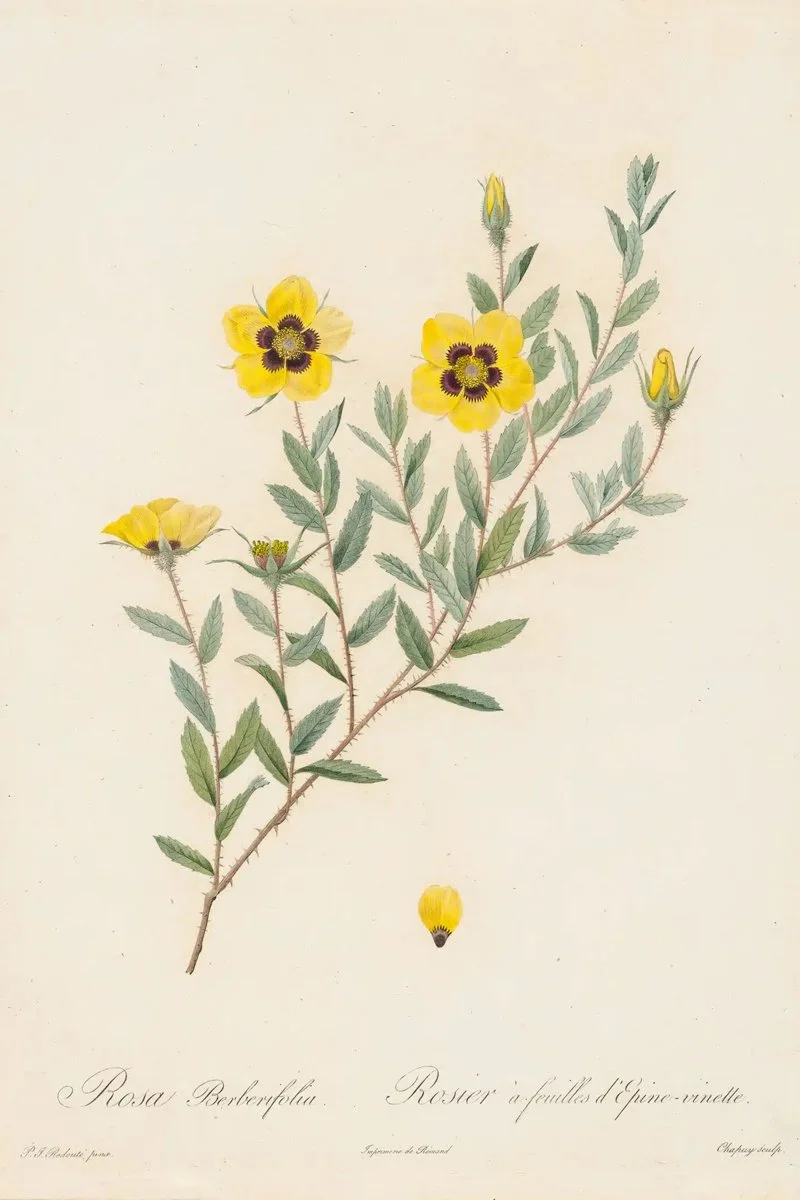
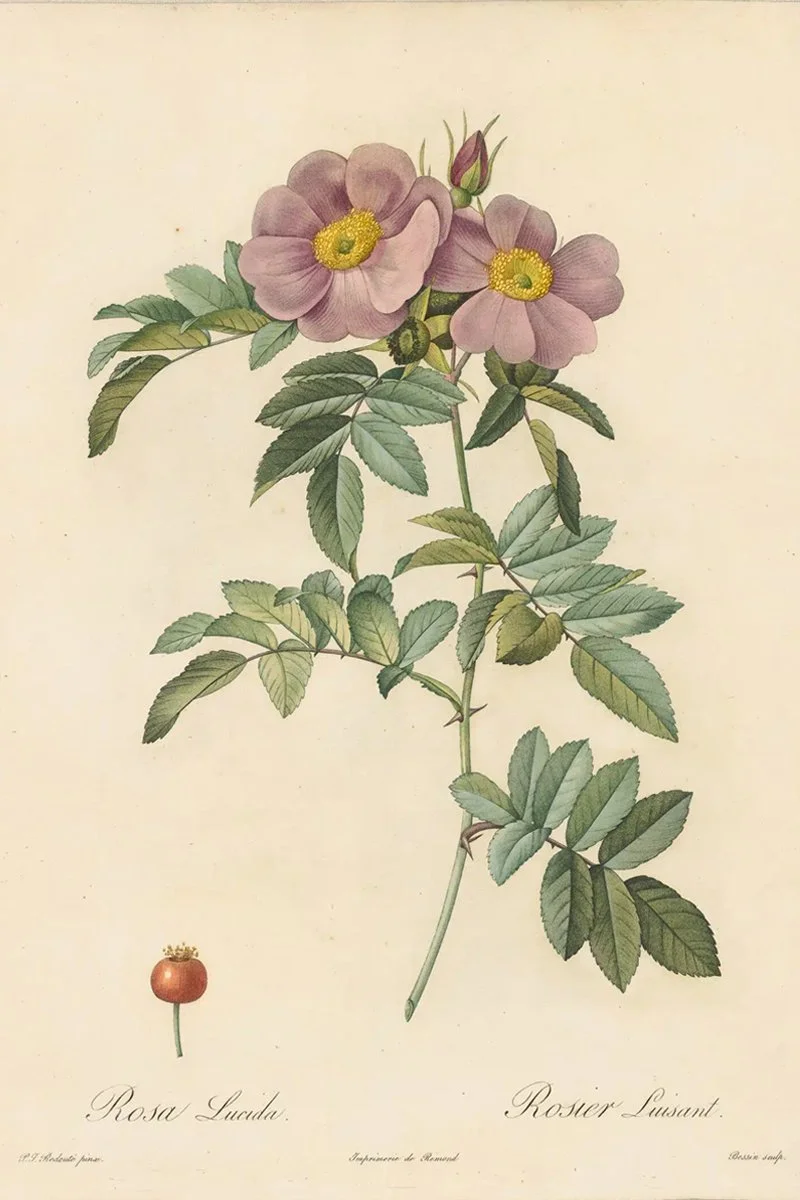
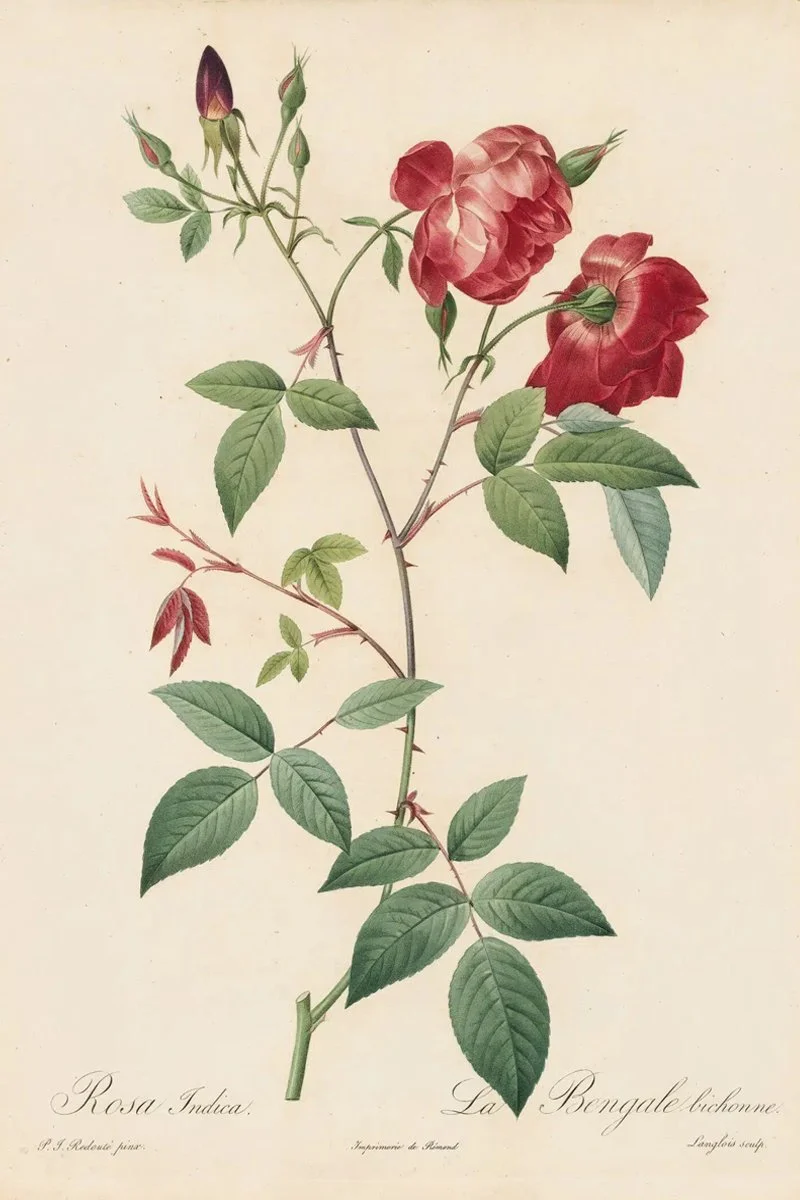
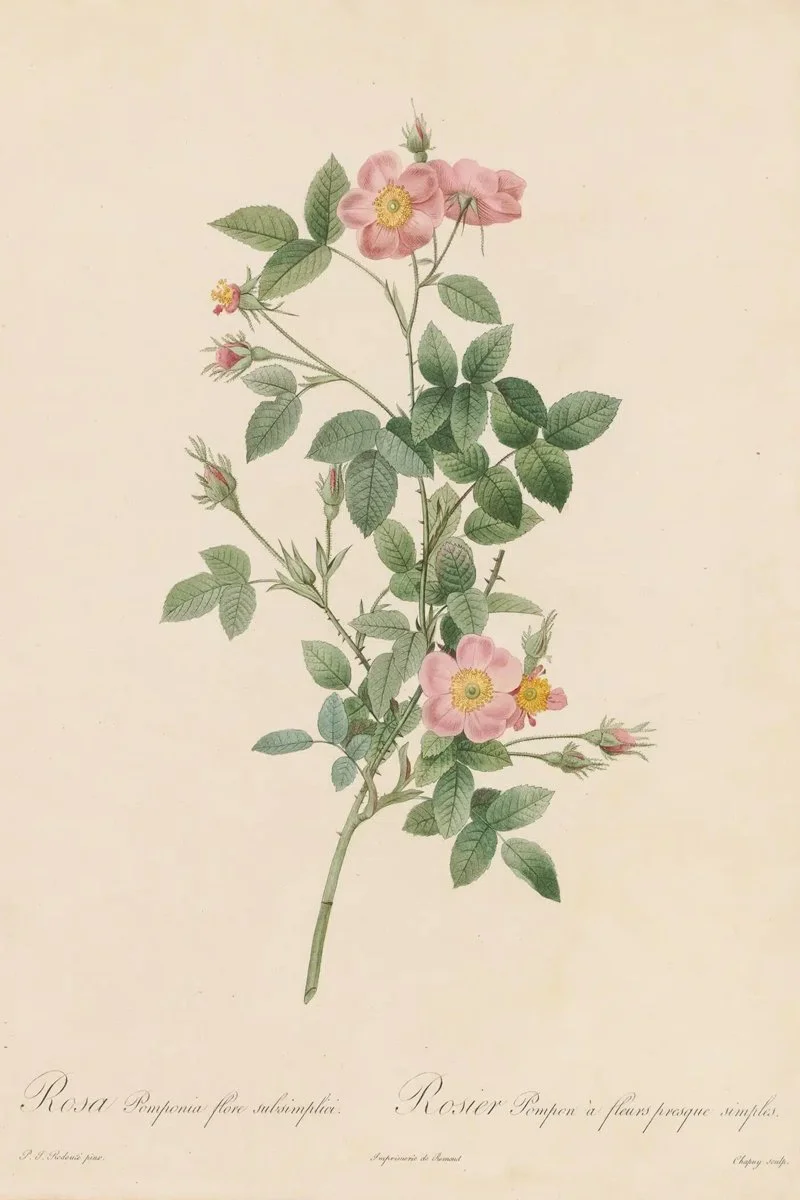
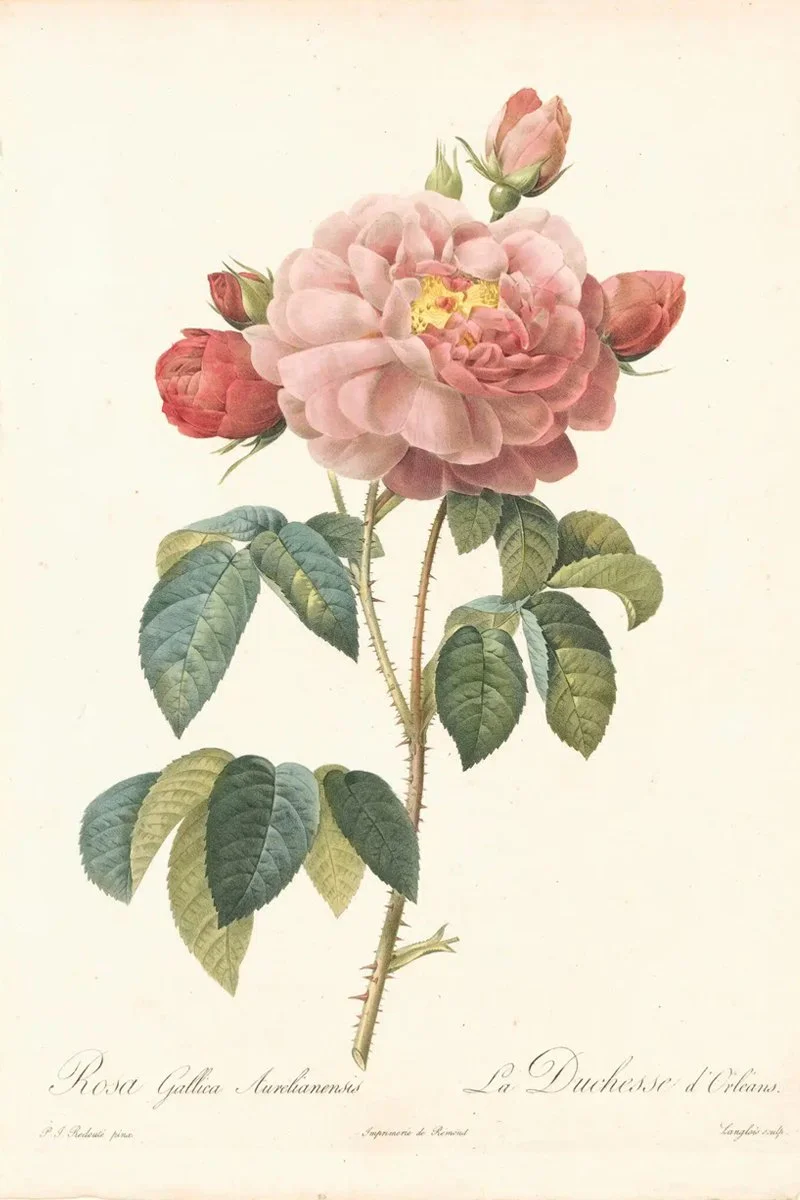
Sublime Floral Illustration of Pierre-Joseph Redouté
Pierre-Joseph Redouté (1759-1840) is considered one of the greatest flower painters of all time and is one of my personal favorites. His work is known for its blend of botanical precision and elegance, and he led an equally colorful and fabulous life, painting flowers for Marie Antoinette at Versailles to immortalizing the rose garden of Empress Josephine Bonaparte. Here’s a glimpse into the fabulous art and life of this floral icon.
“I devoted myself to the most comprehensive botanical studies ... in three respects: accuracy, composition, and color. Only the union of those three qualities can lead to perfection in botanical illustration.”
Developing His Signature style
Pierre-Joseph Redouté was born in Belgium into a family of painters. With very little formal education and receiving basic art training at his father’s studio, he left home at 13 to earn a living as an artist.
He began his career as a portrait painter, but his passion was flowers. He was influenced by the Dutch and Flemish flower painters of the Baroque period, including Ambrosius Brueghel, Rachel Ruysch, Jan van Huysum, and Jan Davidszoon de Heem.
In his early 20s he followed his brother to Paris, the capital of botany. Between odd jobs he spent his free time painting flowers in the Jardin du Roi, the famed medicinal and botanical garden on the left bank of the Seine.
Redouté sold those early flower paintings to a street vendor who made tinted copper engravings from them, which caught the attention of a high ranking official and amateur botanist, Charles Louis L’Héritier de Brutelle. Charles became his first patron and introduced him to the world of botanical illustration and the teacher at the Jardin des Plantes, Dutch painter Gerard van Spaendonck.
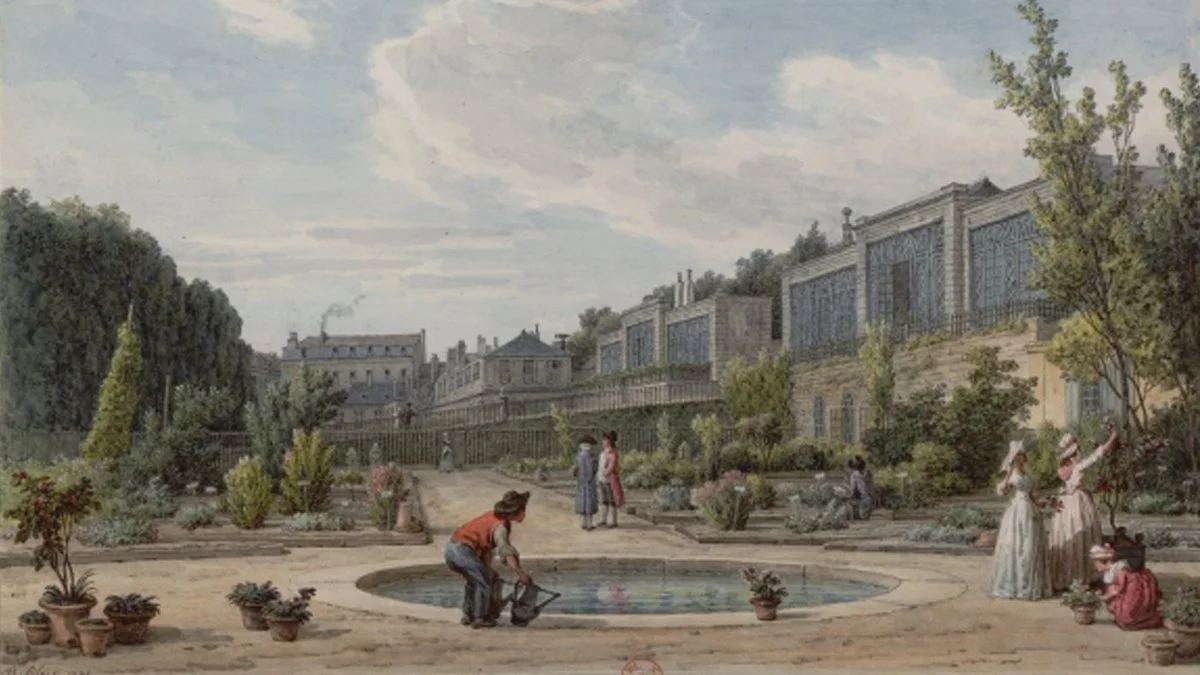
Jean-Baptise Hilarie, Jardin des plantes, 1794
Flower Painting Technique
Redouté quickly became Van Spaendonck's pupil and developed his signature flower painting style based on these fundamental teachings. He had a natural talent and patience for the detailed techniques required for scientifically precise and breathtakingly beautiful botanical painting.
Unlike other botanical illustrators of his time, who often worked from herbarium specimens, Redouté painted live plants cultivated in gardens and nurseries around Paris. The practice of using live plants translated into his work, giving it a freshness and refinement that radiates off the page.
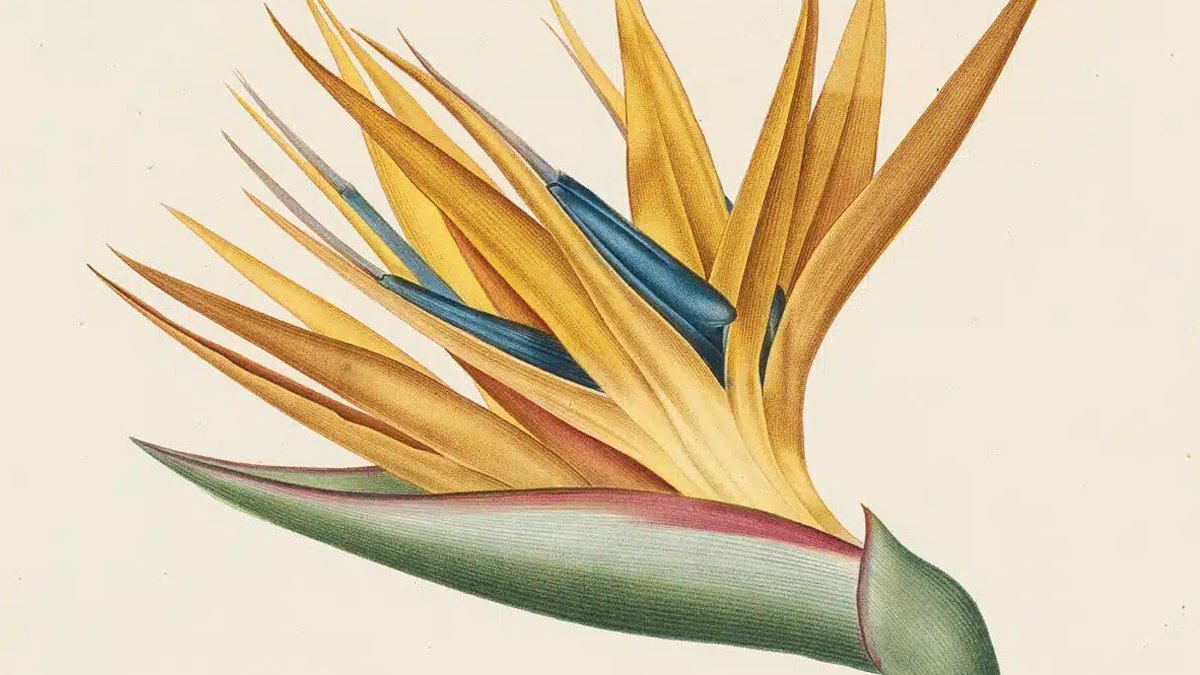
Redouté bird of paradise detail
The Art of Reproduction
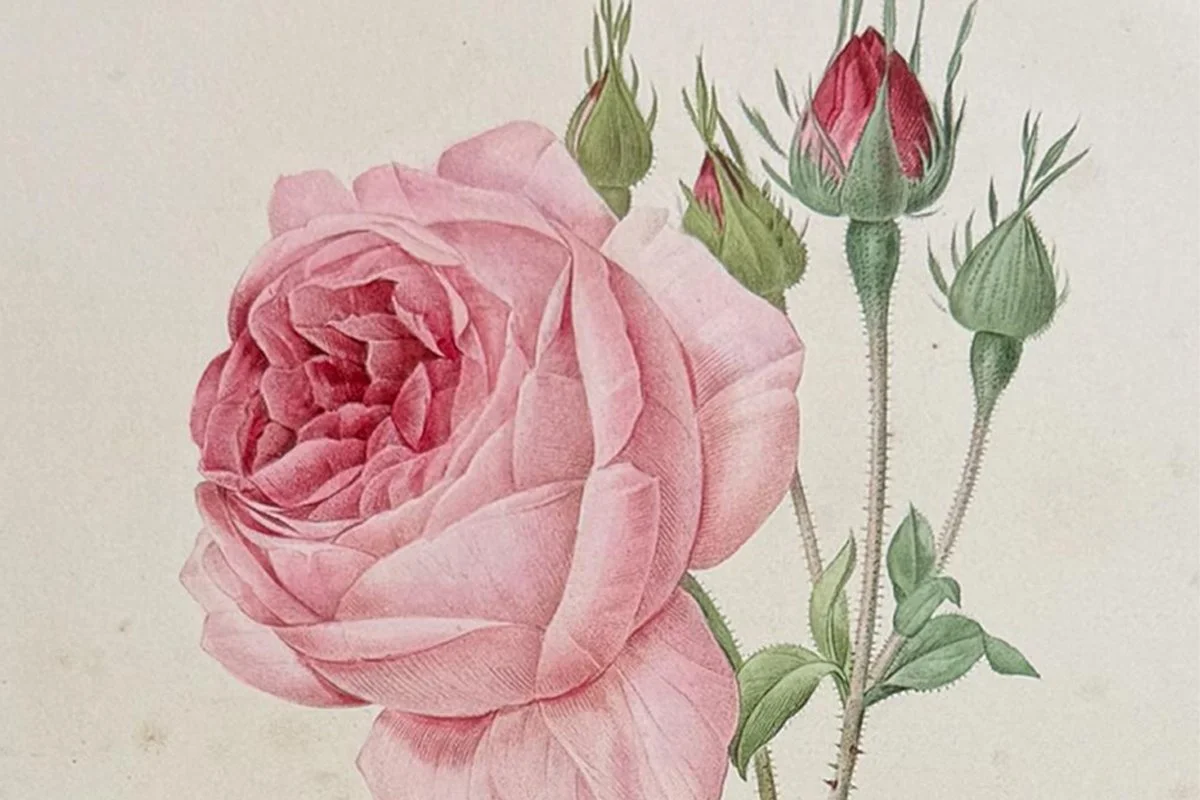
Realizing the importance of mastering the art of reproduction to ensure the reach and legacy of his flower paintings, he traveled to London to learn the latest state of the art technique of stipple engraving. Although stipple engraving was a labor intensive process, the result was of remarkably high quality.
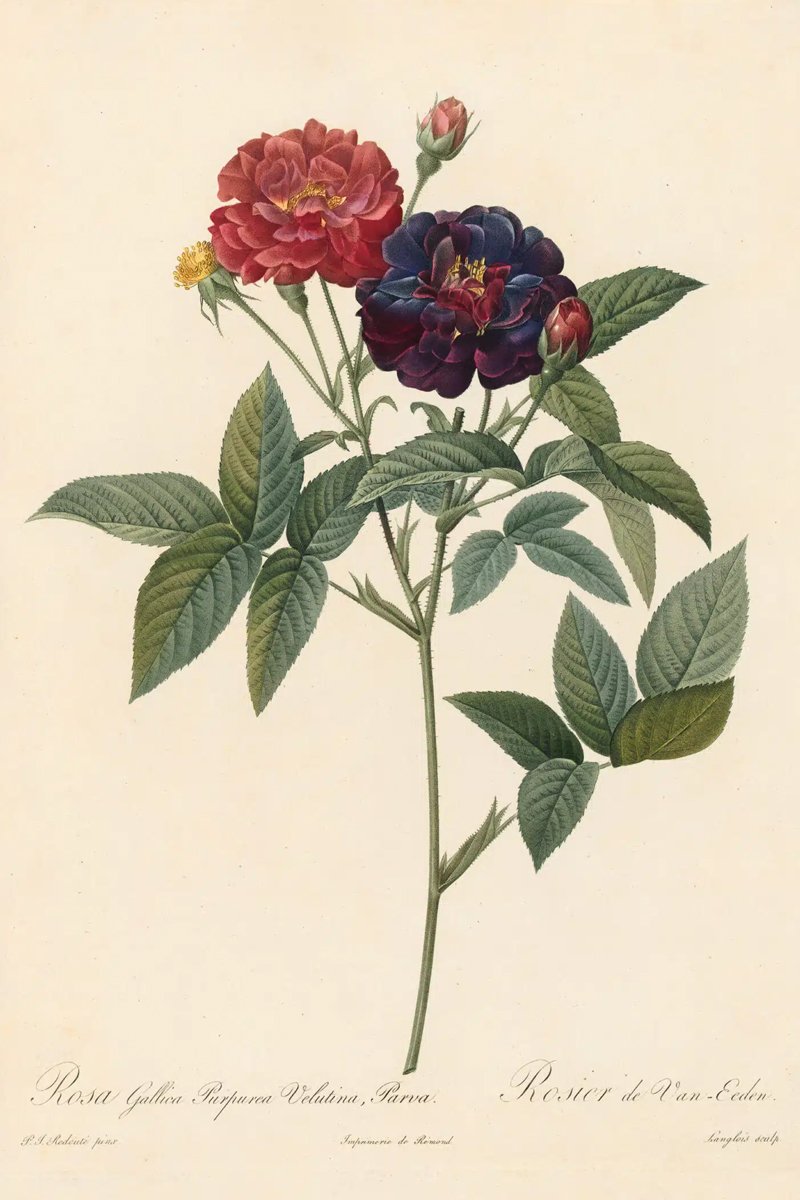
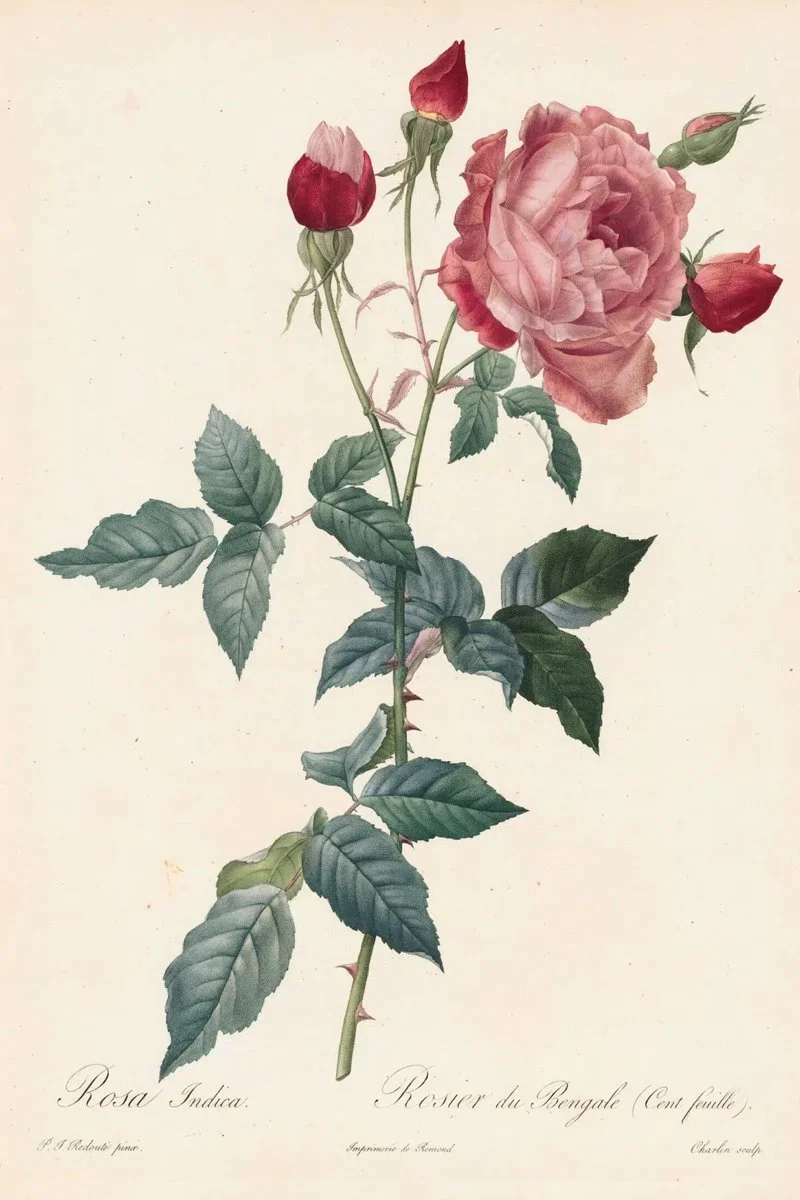
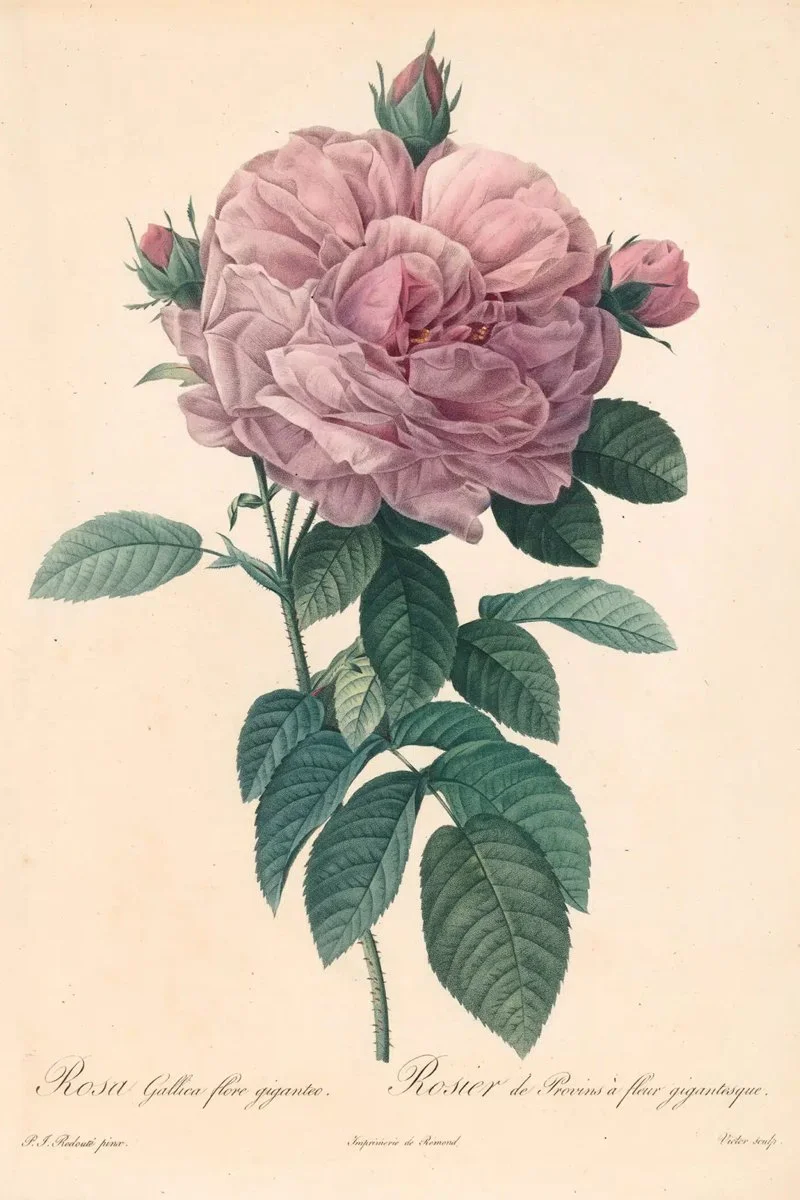
The ability to reproduce opened important doors for Redouté, enabling him to begin publishing his botanical paintings for patrons, based on subscriptions. Known for his talent and amicability, his patronage was highly affluent, including three French Empresses, Marie-Antoinette, Josephine Bonaparte, and Marie-Amelie.
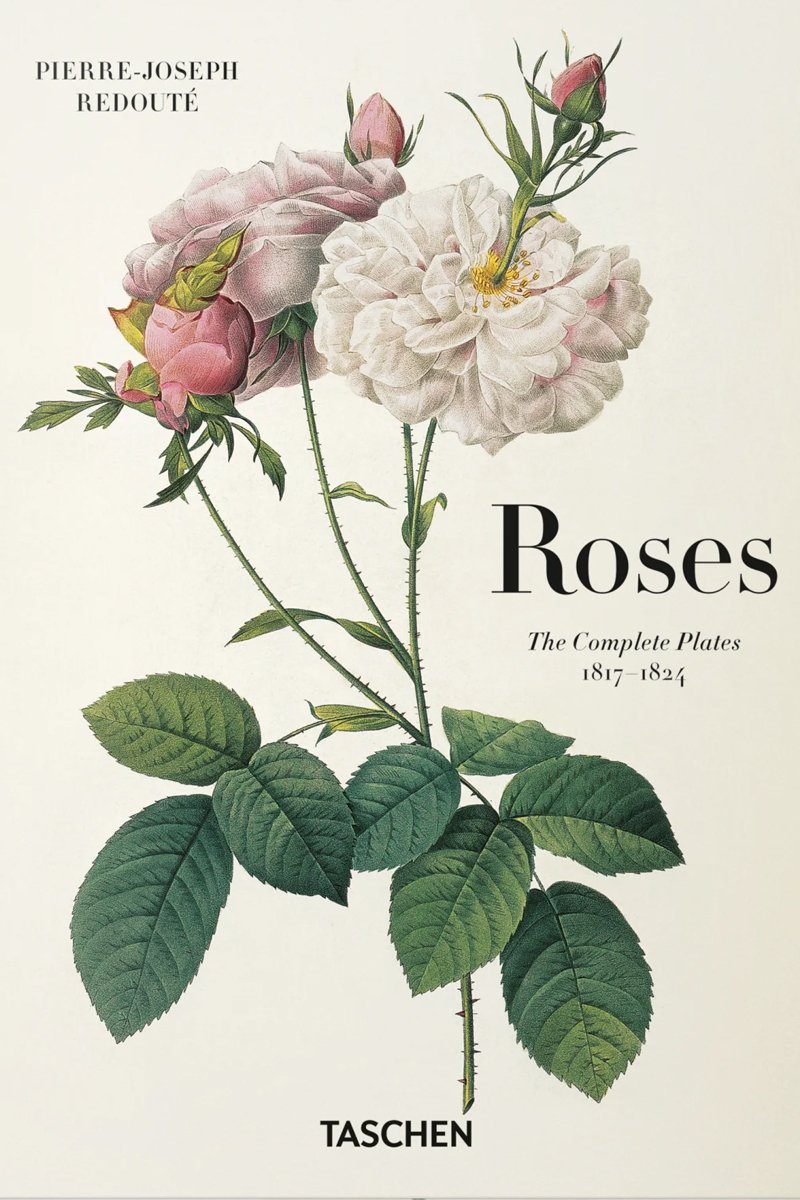
Three of his major works, Les Liliacées, Les Roses, and Choix des plus belles fleurs, were produced under royal patronage and depict plants from the French imperial gardens.
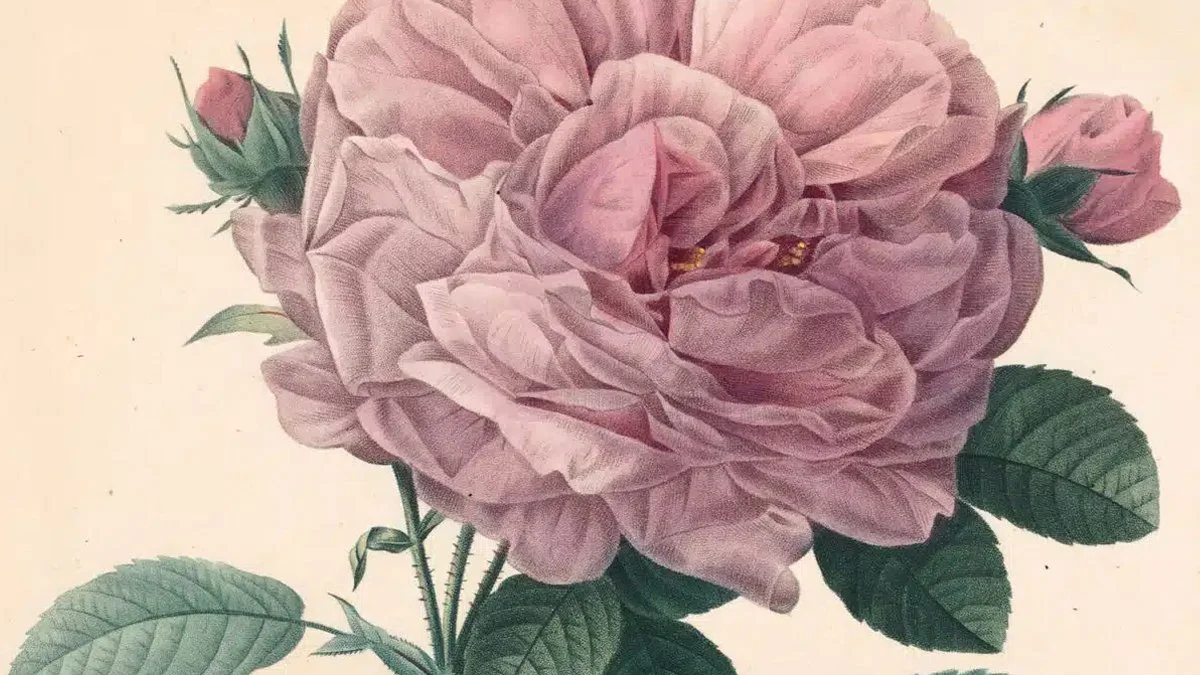
Redouté rose detail of stipple engraving
Entrepreneurial Spirit
Redouté had a good head for business. He chose popular and marketable subjects to illustrate, including lilies, roses, and colorful bouquets. To avoid the uncertainty of relying solely on freelance work and commissions, Redouté also set up a studio with several employees and pupils and taught botanical drawing classes.
Pierre-Joseph Redouté taught and painted up to the day he died at his desk of a stroke in June of 1840. He published over 2,100 plates depicting over 1,800 species throughout his career and participated in nearly fifty publications depicting flowers of the French court and exotic plants from Japan, America, South Africa, and Australia and around the world.
Today, his original paintings are highly sought after by collectors and museums, and his legacy continues to inspire contemporary botanical artists around the world.
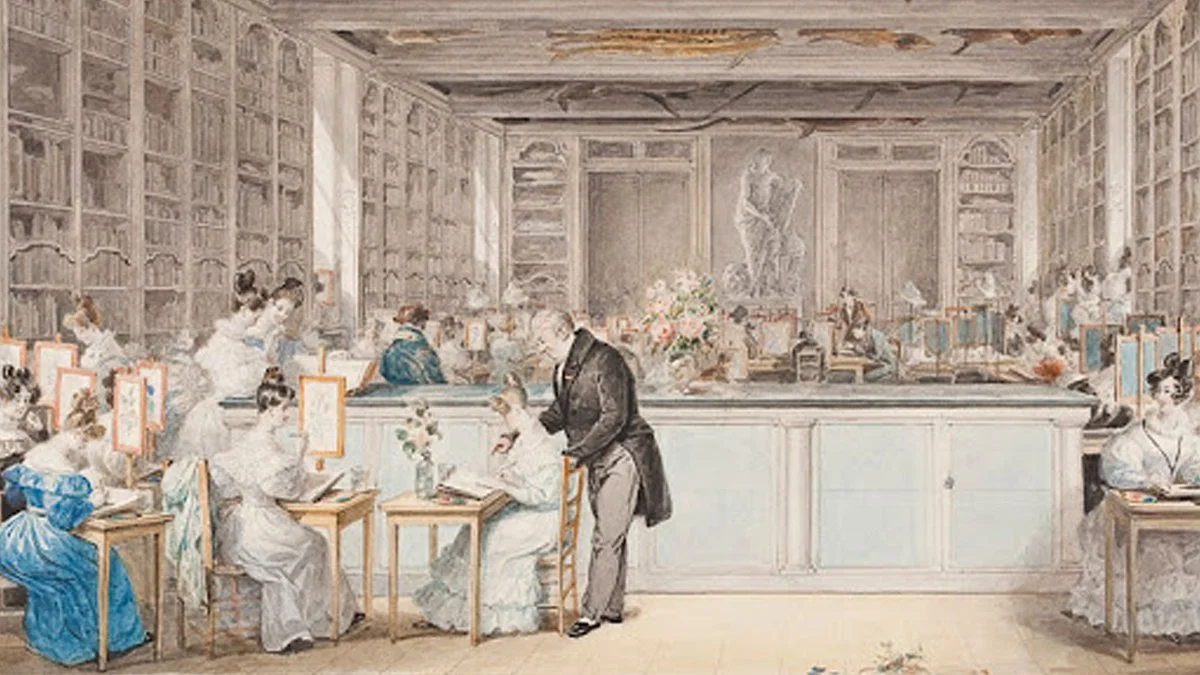
Julie Ribault, Redoute's school of botanical drawing in the Salle Buffon of the Jardin des Plantes, 1830
Les Roses